January marks National Poverty Awareness Month, a critical time to examine the realities behind economic hardship in America and focus on solutions that create long-term mobility. For Hindu Charities for America (HC4A), this month reinforces a core belief: education and workforce readiness are among the most reliable pathways out of poverty.
America’s Poverty Reality: Stable Rates, Persistent Pressure
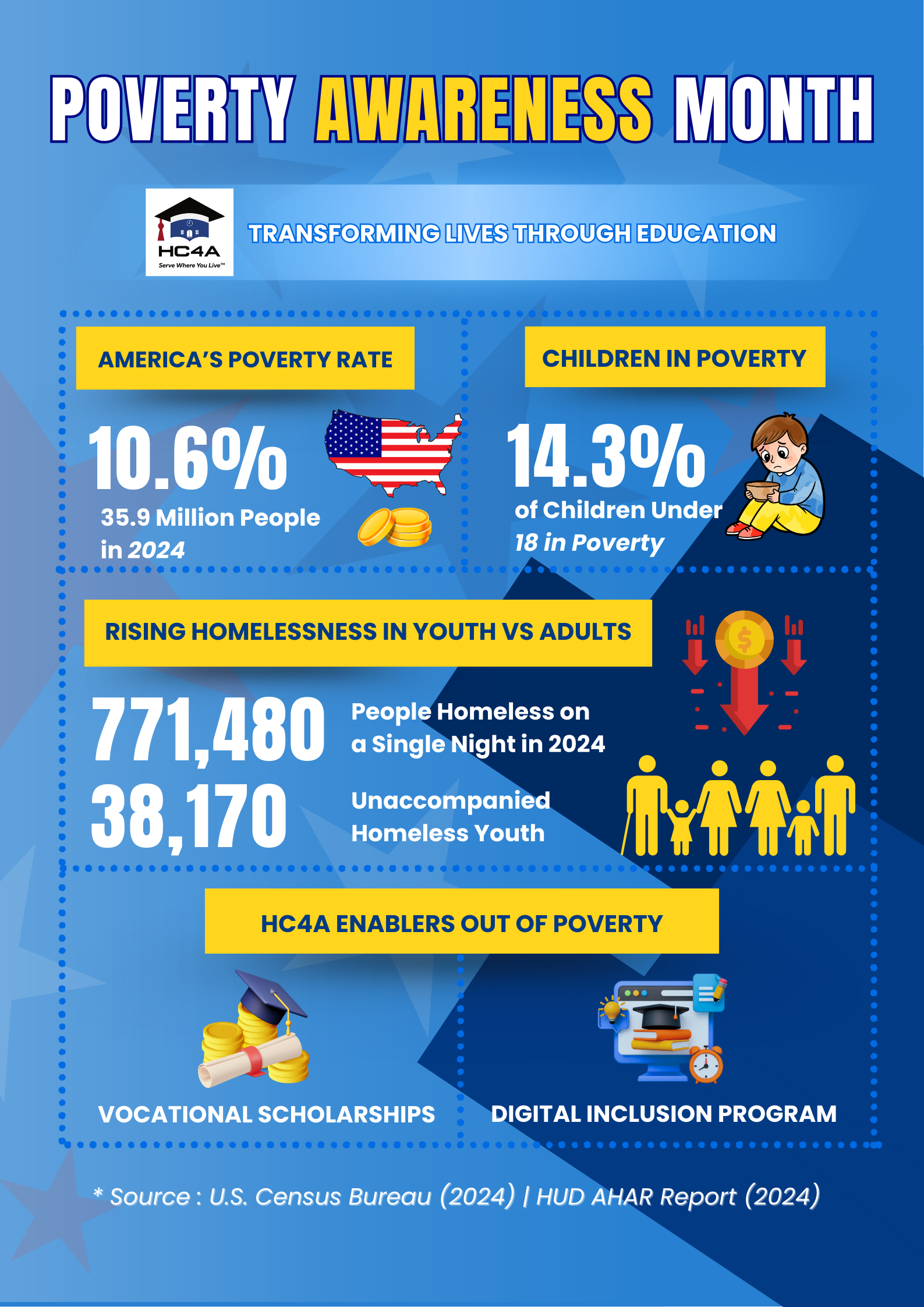
According to the U.S. Census Bureau, the official poverty rate in 2024 was 10.6%, meaning 35.9 million people were living below the poverty threshold.
At the same time, the Supplemental Poverty Measure (SPM), which accounts for tax credits, government support, and essential costs—was 12.9% in 2024, highlighting how many households remain financially strained even when assistance is considered.
Youth vs. Adults: A Gap With Long-Term Consequences
Poverty impacts every age group, but children remain especially vulnerable. In 2024, the poverty rate for children under 18 was 14.3%, higher than the national average. This gap matters because childhood poverty often translates into long-term barriers, reduced access to stable learning environments, fewer career pathways, and limited exposure to skill-building opportunities.
That is why HC4A prioritizes programs that build practical momentum early, through vocational scholarships and career-linked training that strengthen employability and income stability.
Homelessness: When Economic Instability Becomes Housing Instability
Poverty is also deeply connected to housing insecurity. The U.S. Department of Housing and Urban Development (HUD) reported that 771,480 people experienced homelessness on a single night in 2024, an increase of 18% from the previous year. Within that, HUD also reported 38,170 unaccompanied youth experiencing homelessness, reflecting how quickly instability can disrupt education and future outcomes.
How HC4A Moves Awareness Into Action
HC4A turns awareness into measurable progress through initiatives like:
To understand the long-term value of skill-based pathways, read: How vocational programs address the root causes of poverty in the U.S.